

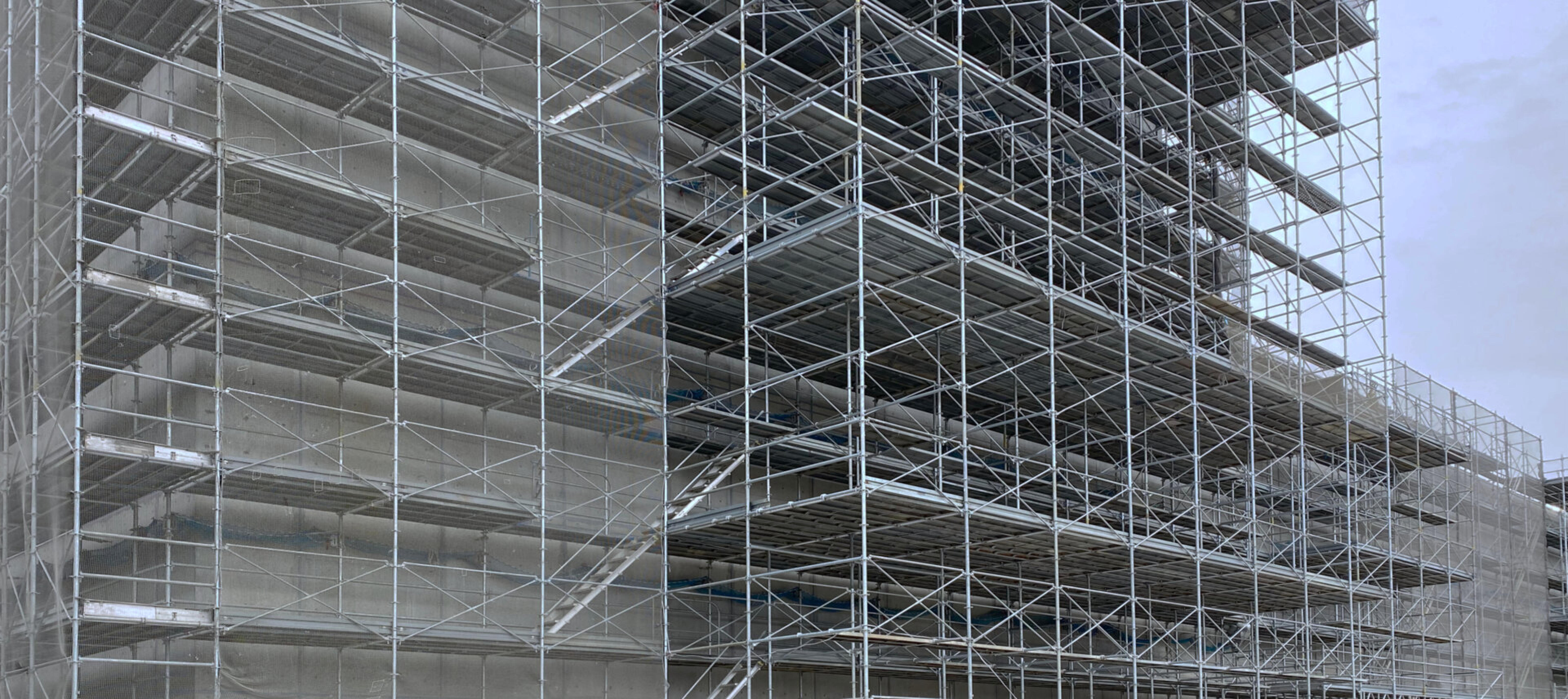
• Extensive scaffolding on the façade of a building under construction
Insight

Distressed Real Estate

Acquiring distressed properties and stalled projects arising from the crisis, with a focus on insolvency law, ‘loan-to-own’ schemes and buyer protection

| Reading time 7 min. | Author: Martin Neupert

When acquiring distressed properties, timing is crucial: whilst a purchase can be completed more quickly prior to insolvency, there is a risk of the transaction being challenged under Sections 129 et seq. of the Insolvency Code (InsO). Acquiring a property from within the insolvency proceedings is safer, but slower and more formal. When purchasing from the insolvency estate, key liability provisions such as section 75 of the German Fiscal Code (AO) and section 25 of the German Commercial Code (HGB) do not apply in the same way, meaning that the purchaser receives the property largely free of encumbrances. In a ‘loan-to-own’ transaction, the investor acquires the non-performing loans, together with the land charges, from the bank. A notice of transfer of title under Section 883 of the German Civil Code (BGB) secures the claim to acquisition of title in rem in all cases until the encumbrances have been discharged and the necessary approvals have been obtained.

What ‘distressed’ means in legal terms: the acquisition windows

‘Distressed’ is not a legal term, but rather describes a spectrum of situations. At one end of the spectrum is a mere payment default, where the owner is no longer servicing their loans but is still able to carry on with their business. In the middle lies impending insolvency or over-indebtedness, where an application for insolvency is imminent. At the other end of the spectrum are formal insolvency proceedings, in which the administrator has control over the assets.

Each of these situations opens up a different acquisition window with its own set of rules. The earlier the acquisition takes place, the more swiftly and freely negotiations can be conducted; however, there is also a greater risk that the transaction will be challenged at a later stage. Whilst a later acquisition is safer, the roles of the administrator and the court are then more significant.

That is why the first step in any distressed acquisition is to determine the exact situation: At what stage is the seller? How close is an insolvency petition? Which window is still open? This assessment is crucial for the structure of the entire acquisition.

This assessment is not an academic exercise; rather, it determines who the negotiations must be conducted with. Before the petition is filed, the buyer negotiates with the owner; after the petition is filed, with the provisional administrator; and once proceedings have commenced, with the insolvency administrator. Each of these parties has their own objectives and is subject to different powers and time limits.


Acquisitions prior to insolvency: the risk of avoidance

Anyone who makes a purchase prior to insolvency proceedings must bear in mind the possibility of a challenge under insolvency law. If proceedings do subsequently take place, the insolvency administrator may, pursuant to sections 129 et seq. of the Insolvency Code (InsO), challenge and set aside such transactions, provided they have disadvantaged the creditors. A purchase price that is too low or a payment made in the knowledge of the seller’s financial crisis may render the acquisition vulnerable to challenge.

Whilst this risk can be managed, it must not be ignored. A purchase made at a reasonable price, supported by an expert valuation, where the consideration flows into the seller’s assets as genuine consideration, is significantly less vulnerable to challenge than a transaction on special terms. Crucial factors are a market-based price, a clear payment flow and documentation of the purpose of the acquisition.

If the seller is planning a restructuring, the acquisition can form part of a viable restructuring plan, which makes it more difficult to challenge the transaction. Without this safeguard, however, the buyer remains exposed to the risk of having to surrender the property for years to come.

The ‘cash transaction exception’ plays a particular role: where performance and consideration are exchanged immediately and are of equal value, they are largely immune to legal challenges. A purchase in which the market-rate purchase price is paid in instalments in line with the transfer of ownership is therefore significantly more robust than a deferred payment with a long payment term.

Acquisition from insolvency: purchase from the administrator

Once proceedings have been opened, the insolvency administrator takes control of the assets and realises them for the benefit of the creditors. The acquisition then takes place as an asset deal from the estate, usually via a purchase agreement negotiated with the administrator. Whilst this route is slower and more heavily influenced by the court and the creditors’ committee, it offers the purchaser significant advantages in terms of liability.

This is because, in the case of an acquisition from the insolvency estate, key liabilities arising from the predecessor’s actions – which would otherwise burden a standard business or property purchase – do not apply. For example, liability for business taxes under Section 75 of the German Fiscal Code (AO) and liability for the continuation of the business under Section 25 of the German Commercial Code (HGB) do not apply in the same way when acquiring assets from proceedings that have been opened. The purchaser therefore receives the asset largely free of such liabilities.

It is important to note the administrator’s right of option regarding ongoing contracts under Section 103 of the Insolvency Code (InsO): the administrator may choose to honour or reject the performance of such contracts. This is particularly relevant for tenancy, construction and supply contracts relating to the property.

The administrator can only sell the property free of mortgages with the cooperation of, or by paying off, the creditors entitled to separate satisfaction. The purchaser must therefore clarify at an early stage which encumbrances are entered in the land register, who is entitled to them, and whether a transfer free of encumbrances is even possible. Without this coordination, the acquisition free of encumbrances remains blocked.

Loan-to-own: Control over the debt side

Not every distressed acquisition involves the purchase of the property. Another option is financing. In a so-called ‘loan-to-own’ arrangement, the investor purchases the non-performing loans and the associated mortgages from the lending institution, which wishes to withdraw from the exposure. In doing so, the investor takes the place of the bank and holds the key security over the property.

This position opens up several options. For instance, the investor can realise the mortgage and acquire the property at a forced sale. They can also use the claim as leverage in a restructuring or gain control of the property company via a debt-equity swap. Acquiring the debt side gives the investor a stronger negotiating position than a mere purchase of the asset.

Whilst the purchase of the claim itself follows the assignment procedure under Section 398 of the German Civil Code (BGB), the land charge is governed by property law. The validity and enforceability of the claim and the security, as well as their priority in the land register and any objections from the debtor, must be examined. A proper acquisition of the security forms the basis for its subsequent realisation.

In the purchase of a debt, the price is a matter of negotiation and is generally below the face value of the debt, as the institution has already factored in the potential default. The investor’s profit is derived from the difference between the purchase price and the actual proceeds from realisation. This calculation stands or falls on the basis of the security’s value, which must therefore be assessed prior to purchase.

Halted property development projects: taking over a half-finished building

Interrupted property development projects are a special case. If a property developer runs into financial difficulties, a building site is often left in an unfinished state. Buyers have already acquired rights to these properties and paid instalments. Anyone taking over and completing such a project faces a complex situation involving building contracts, security interests, public-law approvals and the claims of the original purchasers.

Firstly, the status of the existing contracts must be clarified: Which instalments were due in accordance with the Estate Agents and Property Developers Regulation, which services have been provided, and what security exists for the purchasers? The party taking over must decide whether to step into the existing purchase contracts or to establish a new structure. They must also clarify how they will take over the planning permission and the chain of liability for the work already completed.

The economic value of a stalled project lies in its completion. A clear legal transfer of construction works, planning permission and purchasers’ rights therefore determines whether the derelict building becomes a marketable property or gives rise to a dispute.

Public funding or earmarked bank loans are often involved in a halted project. The transferee must clarify whether they will assume these obligations, settle them or renegotiate them. The warranties provided by the building contractors already working on the project must also be secured before work on completion begins.

Securing your purchase: reservation, conditions and timing

In a crisis, speed is of the essence, but speed without safeguards is dangerous. The most important tool for securing your purchase is the priority notice of transfer of title under Section 883 of the German Civil Code (BGB). It secures the buyer’s contractual claim to the transfer of title in rem, thereby protecting them from further dispositions by the seller, as well as from interim encumbrances and competing purchasers.

Timing is crucial to the outcome. In a distressed situation, the purchaser is racing against the clock, competing with other interested parties and facing the threat of an insolvency petition. It is therefore essential that the structure is finalised early, the financing is in place and the security is entered into the Land Register without delay. Otherwise, the property will go to a quicker prospective buyer, or it will be acquired with a risk that cannot be resolved at a later stage.

In addition to the priority notice, a notary’s escrow account and clearly defined conditions for payment should also be given due consideration. The purchase price should only be released once the priority notice has been entered in the Land Register and the clearances of encumbrances and approvals have been obtained. This ensures that the buyer remains protected even if insolvency proceedings are commenced against the seller between the notarisation and the transfer of title.

About the author

Martin Neupert
Martin Neupert
Partners · Property and Procurement
Get in touch

Martin Neupert is a solicitor and founding partner of Maxfeld.legal. For over 30 years, he has been advising investors and project developers on property and company law, and assisting them with acquisitions arising from financial difficulties and insolvency.

A suspension bridge with green and white pylons spans the blue water

How to safely purchase a distressed property

We review the acquisition process, safeguard your purchase against challenges and guide you through the purchase in the event of a crisis or insolvency, from the structural aspects right through to the Land Registry.

Get in touch

Frequently asked questions about ‘distressed property’

The term refers to the acquisition of distressed properties and projects: from an insolvent owner, in the face of impending insolvency, from insolvency proceedings that have been initiated, or through the purchase of the distressed financing. The appeal lies in the price; the risk lies in the seller’s circumstances. Timing is crucial: the earlier the acquisition takes place, the quicker the process, but the greater the risk of the transaction being challenged. The later the acquisition takes place, the more secure it is, but also the more formal the process becomes.

Challenging transactions in insolvency proceedings. Should proceedings be initiated at a later date, the insolvency administrator may, in accordance with sections 129 et seq. of the Insolvency Code (InsO), challenge and set aside such transactions, provided they have disadvantaged the creditors. A purchase price that is too low, or a payment made in the knowledge of the crisis, renders the acquisition vulnerable to challenge. A market-based price, substantiated by an expert valuation, and a clear payment history, on the other hand, significantly reduce the risk.

When acquiring assets from the estate, key liabilities arising from succession do not apply. For instance, liability for business taxes under section 75 of the German Fiscal Code (AO) and liability for the continuation of the business under section 25 of the German Commercial Code (HGB) do not apply in the same way as in an ordinary sale. The purchaser acquires the asset largely free of encumbrances. However, the process is slower, more heavily influenced by the court and the creditors’ committee, and the administrator’s right of election regarding ongoing contracts under Section 103 of the Insolvency Code (InsO) must be taken into account.

The investor purchases the non-performing loans and the associated mortgages from the financing bank and takes the bank’s place. From this position, the investor can realise the security, acquire the property at a forced sale, or use the claim as leverage in a restructuring to gain control of the property company. The purchase of the claim follows the assignment in accordance with Section 398 of the German Civil Code (BGB). In doing so, the existence, priority and enforceability of the claim and the security must be verified.

Firstly, the status of the existing contracts must be clarified: Which instalments were due under the Estate Agents and Property Developers Regulation, which services were provided, and what safeguards are in place for the original purchasers? The transferee must decide whether to step into the purchase contracts or to set up a new structure, whilst taking over the planning permission and the warranty chain for the part of the development that has already been completed. The value lies in the completion of the development.

The priority notice of transfer under Section 883 of the German Civil Code (BGB) secures the claim to transfer of ownership as a right in rem and protects against further dispositions, encumbrances and competing purchasers. Payment should be made subject to the following conditions: receipt of the priority notice, clearance of encumbrances and presentation of the necessary approvals. No money changes hands until the security is recorded in the land register. Timing is also crucial, as the purchaser is competing against other interested parties and the threat of an impending insolvency petition.

Contact

Get in touch

Send us a message. We will get back to you within one working day.

Maxfeld.legal

Rechtsanwaltsgesellschaft mbH
Leipziger Platz 21
90491 Nuremberg

Brochure

Request brochure

Enter your contact details. We will send you the brochure by email right away.