

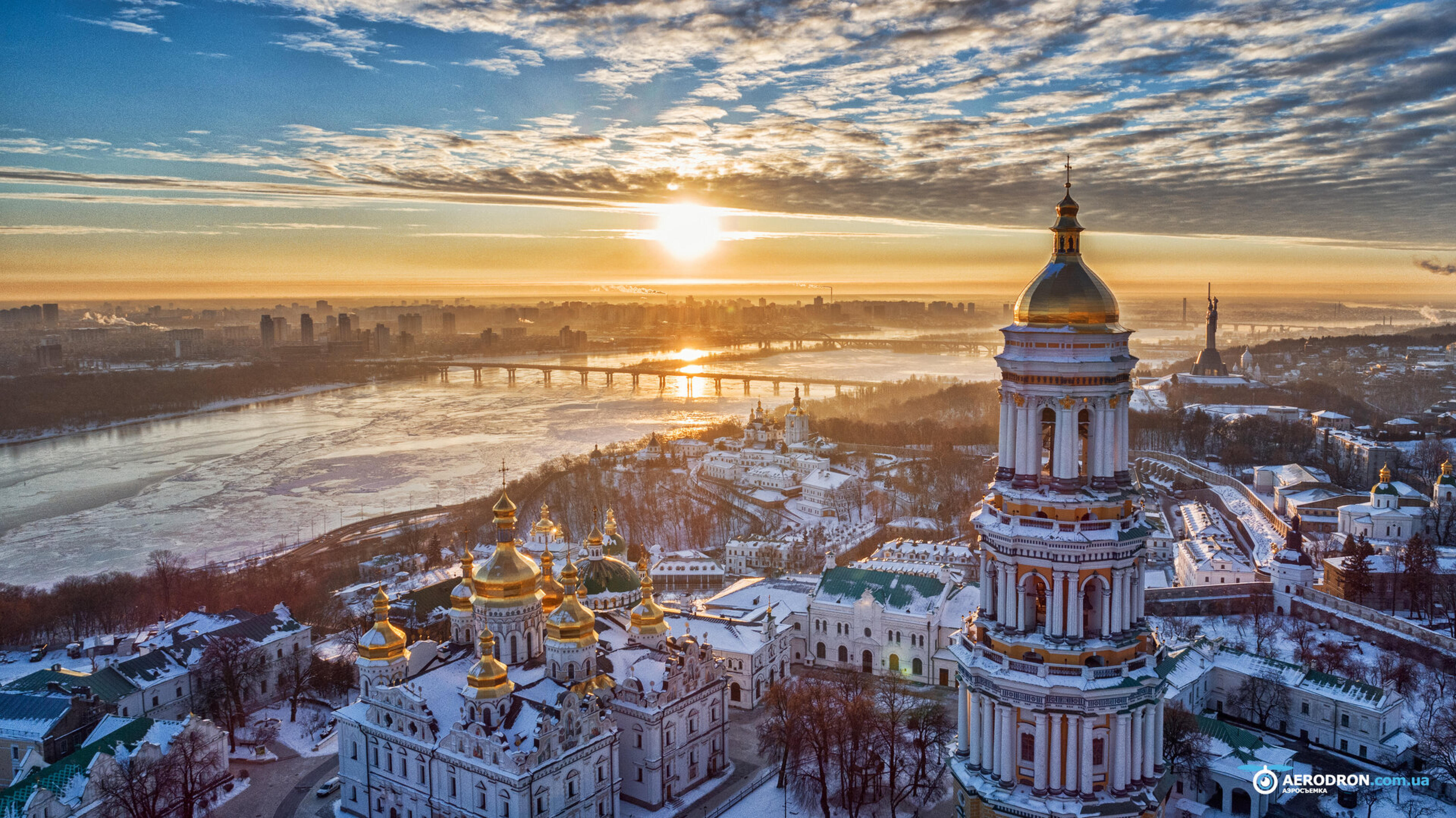
• Golden church domes of a monastery overlooking a snow-covered town at sunrise
Insight

Contracts with Ukrainian business partners

Choice of law, place of jurisdiction and the enforcement of judgements and arbitral awards in contracts with Ukrainian partners.

| Reading time 4 min. | Author: Dmitry Novitsky

In contracts with Ukrainian business partners, the applicable law, the competent forum for dispute resolution and subsequent enforcement must be aligned. A German judgement is recognised in Ukraine under the Hague Conventions. An arbitral award is enforceable almost worldwide under the 1958 New York Convention. Ukrainian law recognises the parties’ choice of law. An arbitration clause, for example in favour of the ICC, VIAC or ICAC, should clearly specify the seat, rules, language and number of arbitrators. Although the Ukrainian Chamber of Commerce and Industry has generally recognised the war as a force majeure event, its certificate only provides relief where it is proven that the specific service has been affected. Foreign exchange restrictions imposed by the National Bank can be mitigated through advance payment, milestone payments or a letter of credit.

Which law should govern the contract?

In cross-border commercial contracts, Ukrainian law recognises the choice of law made by the parties. They may choose to have their contract governed by German or Ukrainian law, or by the law of a third jurisdiction. This freedom is the starting point for any negotiations. The general principles governing the choice of law and place of jurisdiction in international contracts are dealt with in a separate article; this article focuses on the specific features of Ukrainian law.

German law offers the German partner familiarity and a well-established body of contract law. However, this comes at a practical cost: if the contract is to be implemented in Ukraine and, if necessary, enforced – for example, in the case of on-site construction or supply services – German legal concepts will come up against Ukrainian registers, authorities and courts. In such cases, Ukrainian law may be the smoother route, particularly where security interests, immovable property or public-law authorisations are involved. The choice of law should therefore not be made reflexively in favour of one’s own law, but rather based on where the contract has its centre of gravity and where the risk of enforcement lies.

Court or arbitration tribunal: where will the dispute be heard?

In the case of contracts involving Ukraine, the choice of dispute resolution forum is not a matter of preference, but a key decision regarding legal certainty. A judgment handed down by a German state court is recognised in Ukraine under the Hague Conventions.

Arbitration offers the widest scope. An arbitral award is enforceable internationally, as Ukraine has acceded to the 1958 New York Convention on the Recognition and Enforcement of Foreign Arbitral Awards. Established institutions such as the ICC, the Vienna International Arbitration Centre (VIAC) or the International Commercial Arbitration Court at the Ukrainian Chamber of Commerce and Industry (ICAC) are suitable venues. The arbitration clause should clearly specify the seat, rules, language and number of arbitrators, as an imprecise clause is the most common reason why arbitration proceedings stall.

How are German court judgements and arbitral awards enforced in Ukraine?

A German court judgement is recognised and enforced in Ukraine under the Hague Conventions, which apply to Ukraine and, via the EU, to Germany, and do not require any agreement between the parties. The Ukrainian court does not re-examine the merits of the case, but only checks whether the place of jurisdiction is recognised under the Conventions, whether the debtor was duly summoned, and whether the subject matter of the dispute is not excluded.

This applies to judgements arising from proceedings commenced on or after 1 September 2023. A judgment is recognised if the defendant was domiciled in the state where the judgment was given, had appeared in court there, or the contractual obligation was to be performed there; recognition is refused only in the event of defective service, fraud, a breach of public policy or a conflicting judgment. Exclusions include, amongst others, insolvency, intra-company disputes, intellectual property, transport and arbitration proceedings, as well as interim measures such as attachment.

An arbitral award is enforced on the basis of the New York Convention. The grounds for refusal are narrowly defined and uniform internationally. The difference lies in the scope: the judgement is enforceable in Ukraine and the other contracting states to the Hague Conventions, whilst the arbitral award is enforceable in more than 170 states. In a serious case, this single decision can determine the value of the entire contract.

How are war, force majeure and sanctions dealt with?

Since 2022, crisis preparedness has been an integral part of every contract relating to Ukraine. In the event of force majeure, the Chamber of Commerce and Industry in Ukraine certifies the existence of force majeure circumstances. It has generally recognised war as such a circumstance. However, this certification does not provide a blanket exemption; rather, it must be demonstrated that the war-related event prevented the specific performance. The clause should therefore define which events are covered, how they are to be proven, and what consequences arise, such as suspension, extension of deadlines, price adjustments or termination.

In addition, a sanctions clause should be included in the contract. This ensures that neither party is obliged to perform an obligation that contravenes European, Ukrainian or other applicable sanctions. It also sets out the consequences should a partner, an end user or goods be subject to sanctions. Furthermore, a general war clause can address export, transport and payment risks that may change at short notice due to the situation.

What are the key considerations regarding payments and currency?

The issue of payments has taken on greater significance under martial law. The restrictions imposed by the National Bank of Ukraine (NBU) also apply to cross-border payments, meaning that payment flows from Ukraine do not always proceed smoothly. Anyone supplying a Ukrainian partner and expecting payment from Ukraine should therefore clarify in advance the permitted payment method and currency.

Hedging instruments can help. When working together for the first time, payment in advance, instalments based on milestones or a letter of credit are common, as they shift the risk of default. The choice of contract currency should be consistent with the direction of payment and foreign exchange regulations. The payment clause should specify which party bears the risk if a payment fails due to regulatory restrictions. Whilst these points may sound technical, in a real-life scenario they can make the difference between a delayed payment and a payment that fails to materialise.

How can one ensure that a contract is drafted in a way that provides practical safeguards?

The formal aspects of the contract also merit attention. In the case of bilingual contracts, one version should be expressly designated as the authoritative one in order to avoid any additional conflict of interpretation in the event of a dispute. Before signing, it is also necessary to check who is authorised to represent the Ukrainian company and whether a power of attorney or a resolution by the shareholders or directors is required for this purpose. The Unified State Register shows who is authorised to represent the company externally and whether any restrictions are recorded.

Ukrainian law requires specific formalities for certain transactions, such as notarisation for property transactions. If the contract is to be implemented in Germany – for example, when integrating it into German supply chain or group structures – we collaborate with the qualified solicitors at Maxfeld.legal. We clarify the Ukrainian aspects of choice of law, jurisdiction and enforcement in advance.

About the author

Dmitry Novitsky, Lawyer for Ukrainian law, Maxfeld.legal Nuremberg
Dmitry Novitsky
Ukraine Desk
Get in touch

Dmitry Novitsky is a Ukrainian lawyer who is admitted to practise as an advocate in Ukraine. As a partner at the law firm Borysenko & Partners in Dnipro, he handles cases in the fields of company law, property law and public procurement law. At Maxfeld.legal, he supports the teams on projects relating to Ukraine. The legal implementation in Germany is handled by the firm’s qualified lawyers.

A curved footbridge with several arches spanning a wide river

Ensuring that contracts with Ukrainian partners are enforceable

We draft the choice of law, arbitration clause and enforcement provisions in such a way that your title is enforceable in Ukraine; the German side of the contract is handled by the solicitors at Maxfeld.legal.

Get in touch

Frequently asked questions about contracts with Ukrainian partners

Yes, in the case of cross-border commercial contracts, Ukrainian law recognises the parties’ choice of law. This may be German, Ukrainian or the law of a third country. The choice should be guided by the contract’s centre of gravity and the risk associated with enforcing it.

Yes, under the Hague Conventions, provided that the place of jurisdiction is covered by them, the debtor has been duly summoned and the subject-matter of the dispute is not excluded.

Because of its scope. The 1958 New York Convention applies in more than 170 countries, whilst the Hague Conventions apply only between their contracting states. In Ukraine, both are enforced; in the case of assets in third countries, only the arbitral award is enforceable.

Established institutions include the ICC, the Vienna International Arbitration Centre (VIAC) and the International Commercial Arbitration Court at the Ukrainian Chamber of Commerce and Industry (ICAC). It is important to have a precise arbitration clause that specifies the seat, the rules, the language and the number of arbitrators.

The Chamber of Commerce and Industry in Ukraine certifies the existence of force majeure circumstances. It has generally recognised the war. However, the certificate does not provide a blanket exemption. It requires proof that the war has prevented the specific performance. The clause should precisely regulate the events, the evidence and the legal consequences.

The National Bank’s restrictions also apply to cross-border payments. The payment method and currency should be clarified in advance. When working together for the first time, safeguards such as payment in advance, milestone payments or a letter of credit are common. The clause should specify who bears the risk of regulatory obstacles to payment.

Contact

Get in touch

Send us a message. We will get back to you within one working day.

Maxfeld.legal

Rechtsanwaltsgesellschaft mbH
Leipziger Platz 21
90491 Nuremberg

Brochure

Request brochure

Enter your contact details. We will send you the brochure by email right away.