


• Silhouettes of construction cranes and high-rise buildings against an orange sunset
Insight

Reconstruction of Ukraine

The legal and regulatory framework for German companies: Procurement regimes, international donors and war risks when getting involved in Ukrainian reconstruction projects.

| Reading time 4 min. | Author: Dmitry Novitsky

According to the World Bank, the reconstruction of Ukraine will take more than ten years and require investment totalling over 500 billion US dollars in the sectors of housing, energy, transport and municipal infrastructure. The EU is providing around 50 billion euros through the Ukraine Facility alone by 2027. German companies gain access via a framework comprising Ukrainian public procurement law, the Prozorro platform, the procurement rules of international donors such as the EBRD or the World Bank, as well as guidelines on war risks and sanctions. The applicable regulatory framework varies depending on the security situation and the source of funding. War risks can be mitigated through cover provided by MIGA and national export credit agencies, as well as through force majeure clauses. The Ukrainian Chamber of Commerce and Industry has already recognised the war in general terms as a force majeure event.

How is the reconstruction organised from a legal perspective?

The key state body is the State Agency for Reconstruction and Infrastructure Development (hereinafter: the Agency for Reconstruction). It coordinates major transport, bridge and building projects, acts as the contracting authority and coordinates implementation with the regional military administrations and local authorities. In addition, the ministries, the grid operator Ukrenergo and the local authorities also award their own contracts.

The project pipeline is increasingly being made transparent via digital registers such as the DREAM platform. These are intended to provide a clear overview of the requirements, planning and expenditure for individual projects. This structure is important for foreign companies, as it shows who the contracting authority is for a specific project and the regulatory framework under which the contract is awarded. For example, a state-funded road construction project operates differently from an energy project co-financed by the EBRD or the reconstruction of a city funded from the EU budget.

How can German companies get involved?

German companies can participate directly in Ukrainian tenders. Formally, this does not always require setting up a separate company, but a local subsidiary or a registered representative office simplifies the process, particularly with regard to permits, staffing issues and day-to-day project management.

It is often advisable to form a consortium with a Ukrainian partner. The local partner contributes licences, staff and market knowledge, whilst the German company provides technology, equipment or financing. The roles, liability, decision-making powers and profit distribution must be set out in a robust consortium or articles of association.

A less resource-intensive alternative is to act as a subcontractor to a Ukrainian main contractor. This lowers the entry barrier under public procurement law. At the same time, however, payment to the subcontractor depends more heavily on the main contractor’s creditworthiness and compliance with the contract. The simplest approach is usually the straightforward supply of equipment and materials. In this case, the focus is on customs, choice of law, transport and payment security rather than local construction works.

How does public procurement via Prozorro work under martial law?

In Ukraine, public contracts are generally awarded via the Prozorro electronic platform. The platform is accessible to everyone and was already a central component of Ukraine’s anti-corruption reform before the war. Foreign bidders are treated on an equal footing, and all tenders and procedures are conducted digitally.

At the start of the full-scale invasion, the government initially suspended competitive procedures and permitted direct awards to enable urgently needed procurement. Gradually, by government decree, it reintroduced competitive Prozorro procedures for awarding contracts, although special rules apply to defence and critical infrastructure. For German companies, this has two implications: on the one hand, market access is legally permitted; on the other hand, the applicable regulatory framework may change depending on the security situation and the sector in question. Before submitting a tender, it should be checked whether the specific project is subject to general public procurement law, a special war-related regulation or the rules of an international donor.

What role do international donors and their procurement rules play?

A significant proportion of the reconstruction is not being funded from the Ukrainian budget, but by international donors. For example, the European Union is providing a multi-annual framework of around 50 billion euros through the Ukraine Facility until 2027. Other sources of funding include the European Bank for Reconstruction and Development (EBRD), the European Investment Bank, the World Bank Group and bilateral development banks such as Germany’s KfW.

In practice, the key factor is this: whoever finances a project usually also determines the procurement rules. A project supported by the EBRD or the World Bank generally follows the procurement guidelines of these institutions and not solely Ukrainian procurement law. These rules are often more familiar and predictable for European companies than the national procedures. The first step in assessing any project is therefore to determine: from which source does the funding come, and which set of procurement rules does this entail?

How are war risks mitigated from a legal perspective?

The risk of war is the greatest obstacle to private investment. This risk cannot be eliminated, but it can be mitigated through contractual and insurance arrangements. On the insurance side, the Multilateral Investment Guarantee Agency (MIGA) of the World Bank Group and national export credit agencies offer cover against political risks and war risks. Ukraine has also established a state-backed insurance scheme against war risks, which is being gradually expanded.

At the heart of the contractual framework is the force majeure clause. In Ukraine, the Chamber of Commerce and Industry (ТПП) certifies the existence of force majeure, as it generally recognises war as a circumstance of force majeure. However, such a certificate does not automatically release a party from all obligations; rather, the specific link between the war-related event and the obstacle to performance must be demonstrated. For this reason, contracts for reconstruction services should precisely stipulate which events constitute force majeure, how they are to be proven, and what consequences they have for deadlines, prices and termination.

What should German companies clarify before entering the market?

Before submitting the first bid, there are a number of fundamental questions that are difficult to address retrospectively. Firstly, the question of presence: is a representative office sufficient, or does the project require a Ukrainian subsidiary with its own licences and planning permission? Secondly, the question of partners: Who is the local partner, what is their creditworthiness and reputation, and how are liability and profits allocated internally?

Added to this are the areas of compliance and sanctions law. For every project, it must be checked whether the client, partner and end-use are subject to sanctions and whether European requirements are being met. Finally, the permits must be clarified. Building, environmental and sector-specific permits are subject to Ukrainian law and require lead time. The implementation of residence and funding regulations on the German side – such as export credit guarantees or the secondment of in-house specialists – is supported by the German solicitors at Maxfeld.legal; we assess the Ukrainian aspects of these issues in advance.

About the author

Dmitry Novitsky, Lawyer for Ukrainian law, Maxfeld.legal Nuremberg
Dmitry Novitsky
Ukraine Desk
Get in touch

Dmitry Novitsky is a Ukrainian lawyer who is admitted to practise as a solicitor in Ukraine. As a partner at the law firm Borysenko & Partners in Dnipro, he advises clients on matters relating to company law, property law and public procurement law. At Maxfeld.legal, he supports the teams on projects relating to Ukraine. The firm’s qualified lawyers are responsible for the legal implementation in Germany.

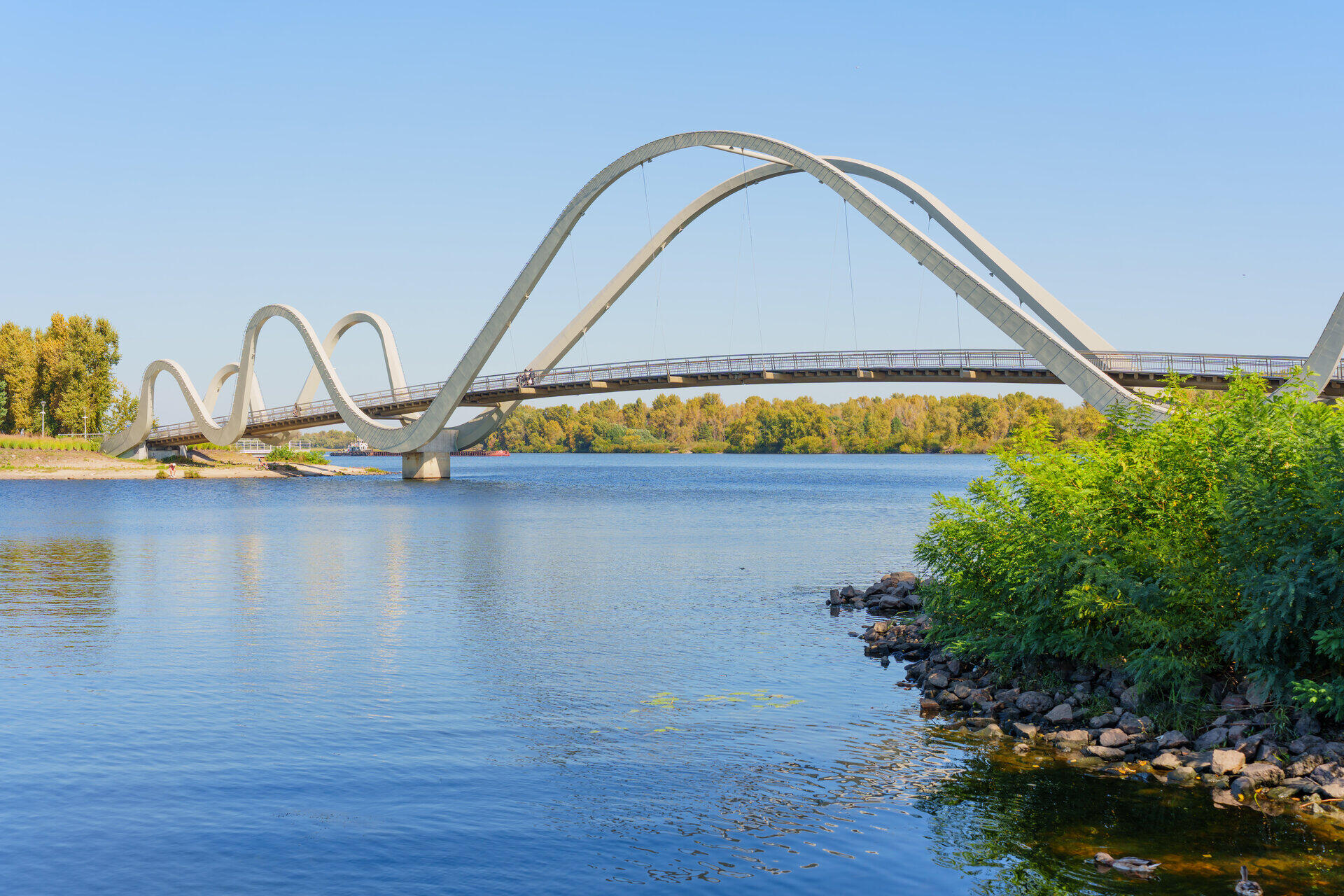
A curved footbridge with several arches spanning a wide river

Making the legal arrangements for reconstruction projects in Ukraine

From Prozorro to donor funding: we will review your reconstruction project on the Ukrainian side; the implementation in Germany will be supported by the lawyers at Maxfeld.legal.

Get in touch

Frequently asked questions about the reconstruction of Ukraine

Yes, foreign bidders are formally treated on an equal footing under Ukrainian public procurement law and can participate via the Prozorro platform. In practice, however, the process usually requires a local presence – for example, in the form of a subsidiary or a registered representative office – as well as the necessary licences for the relevant trade.

Prozorro is an electronic platform through which public contracts in Ukraine are awarded and documented in a manner accessible to the public. It is a cornerstone of Ukraine’s anti-corruption reform. Tenders, awards and contracts are processed digitally.

Yes, at the start of the full-scale invasion, competitive tendering procedures were suspended and direct awards were permitted. The government has gradually reintroduced competitive Prozorro procedures for the award of contracts by decree, although there are special rules for the defence and critical infrastructure sectors. Which set of rules applies depends on the sector and the security situation.

A large proportion comes from international donors: from the EU via the Ukraine Facility, with a budget of around 50 billion euros until 2027; from the EBRD, the European Investment Bank and the World Bank Group; and from bilateral development banks such as KfW. In addition, the Ukrainian government is allocating funds from its own budget.

This is because the donor often determines the procurement rules. A project financed by the EBRD or the World Bank generally follows the procurement guidelines of those institutions, rather than solely national procurement law. These rules are often more predictable for European companies.

There are two options. On the insurance side, MIGA and national export credit agencies offer cover against political and war risks. In addition, Ukraine is establishing a state-supported war risk insurance scheme. From a contractual perspective, the focus is on the force majeure clause, the conditions for which are certified in Ukraine by the Chamber of Industry and Commerce.

Contact

Get in touch

Send us a message. We will get back to you within one working day.

Maxfeld.legal

Rechtsanwaltsgesellschaft mbH
Leipziger Platz 21
90491 Nuremberg

Brochure

Request brochure

Enter your contact details. We will send you the brochure by email right away.